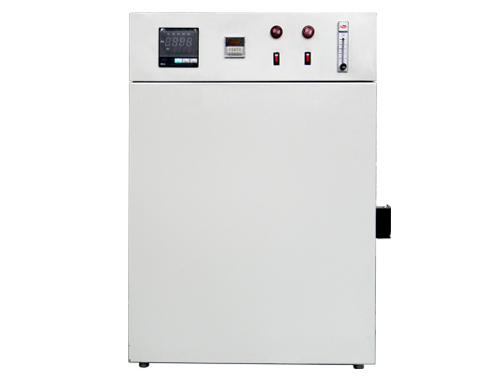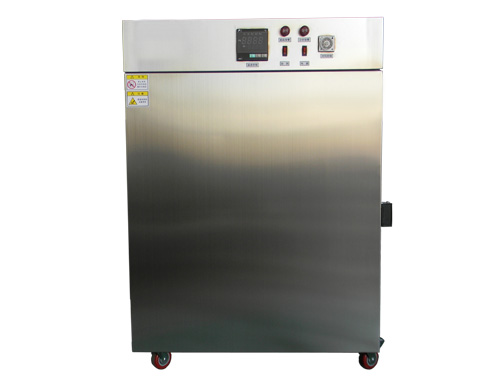
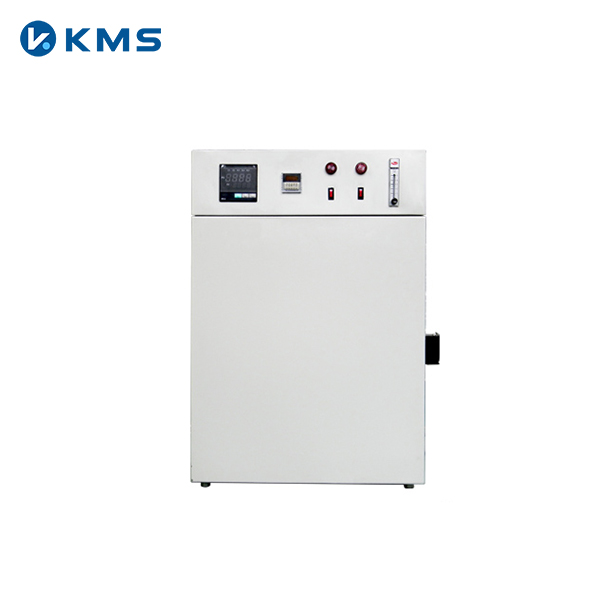
1. Features:
1. The inner wall is fully welded with argon arc, and the high-temperature silicone is tight and airtight; 2. High temperature resistance and cleanliness;
2. Implement and meet the standard GB/T11158-1989 Technical conditions for high-temperature test chamber GB2423.2-1989 Test B
3.Uses:
Anaerobic ovens are suitable for electronic liquid crystal display, LCD, CMOS, IC, medicine, laboratory and other production and scientific research departments. Anaerobic ovens can also be used for drying, heat treatment, aging and other high-temperature tests of non-volatile and non-flammable and explosive materials.
4.Technical parameters
1. Name and model: anaerobic oven
2. Main technical indicators:
2.1 Oxygen concentration: ≤0.5%;
2.2 Temperature range: RT (room temperature) +50~ +300°C;
2.3 Temperature deviation: ≤±2.0°C;
2.4 Heating speed: ≥5°C/min (average throughout the process);
2.5 Power supply: AC220V 50HZ 3KW
2.2 Temperature range: RT (room temperature) +50~ +300°C;
2.3 Temperature deviation: ≤±2.0°C;
2.4 Heating speed: ≥5°C/min (average throughout the process);
2.5 Power supply: AC220V 50HZ 3KW
3. Box structure:
3.1 Box material: The outer box is made of SS41# medium carbon steel plate and is treated with phosphate film salt and then coated with two layers of anti-gloss surface paint;
3.2 Inner chamber material: SUS304# non-magnetic mirror stainless steel;
3.3 Insulation materials: ultra-fine glass wool;
3.4 Exhaust port: ф50; 3.5 Partition: 2 layers, stainless steel square, load-bearing about 30KG; 3.6 Air circulation device: large capacity axial flow motor; 3.7 Heating method: stainless steel electric heater;
3.2 Inner chamber material: SUS304# non-magnetic mirror stainless steel;
3.3 Insulation materials: ultra-fine glass wool;
3.4 Exhaust port: ф50; 3.5 Partition: 2 layers, stainless steel square, load-bearing about 30KG; 3.6 Air circulation device: large capacity axial flow motor; 3.7 Heating method: stainless steel electric heater;
4. Temperature control system
4.1 Temperature measurement sensor: Pt100 platinum resistor;
4.2 Control instrument: imported digital display temperature controller, PID adjustment, control accuracy 0.1°C;
4.3 Over-temperature protection instrument: the over-temperature protection system independent of the main control of the studio to ensure the safety of the test object;
4.2 Control instrument: imported digital display temperature controller, PID adjustment, control accuracy 0.1°C;
4.3 Over-temperature protection instrument: the over-temperature protection system independent of the main control of the studio to ensure the safety of the test object;
4.4 Control system: The main electrical components are imported from Snyder, Omron and other imported components;
Images: