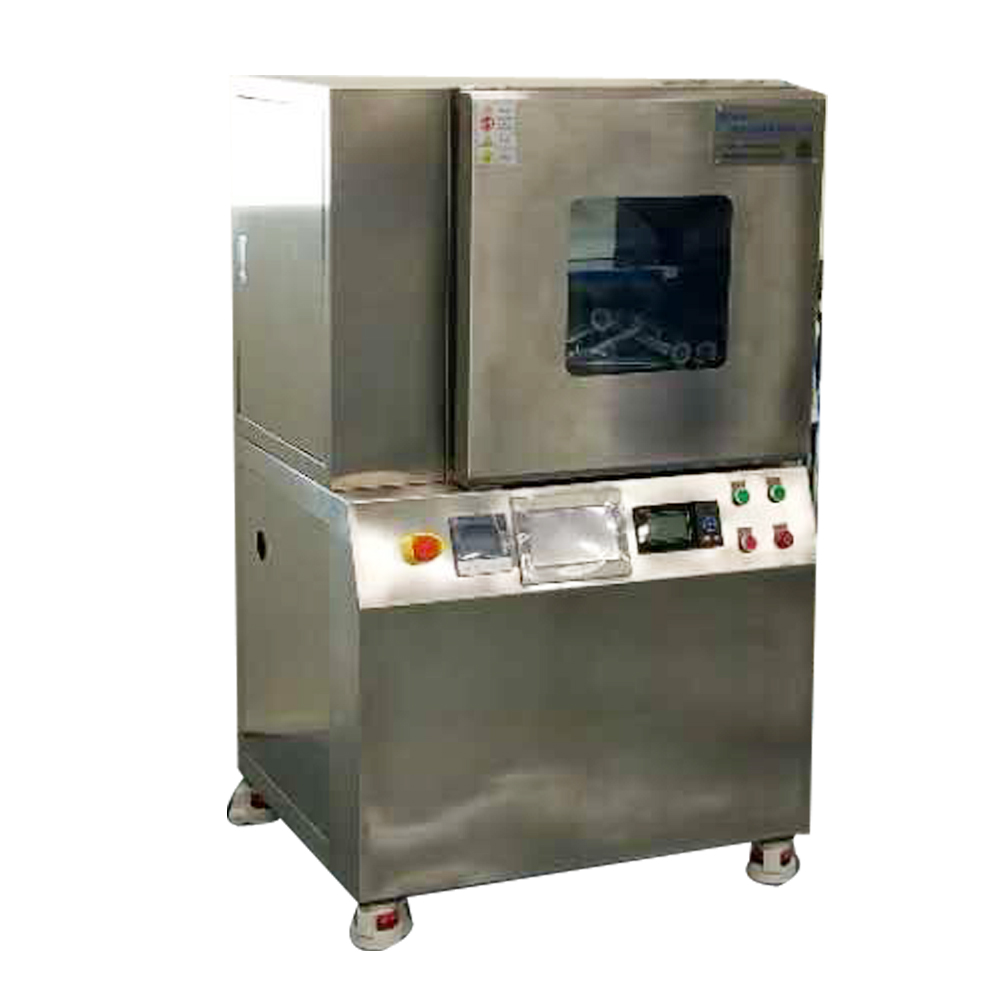
.jpg "HMDS预处理系统-充HMDS气体真空烘箱-HMDS真空烤箱(容积:90升)")
Product Model: HMDS-6020 HMDS Oven
Product Features:
1. The shell is made of stainless steel SUS304 material, and the inner liner is made of stainless steel 316L material; The heater is evenly distributed around the outer wall of the inner tank, and there are no electrical accessories or flammable and explosive devices in the inner tank. Tempered, bulletproof double-glazed doors allow you to observe objects in the workshop at a glance.
2. The box door closure can be adjusted, and the overall molded silicone rubber door sealing ring ensures a high vacuum degree in the box.
3. Microcomputer intelligent temperature controller, with dual digital display and PID self-setting function for setting and measuring temperature, accurate and reliable temperature control.
4. The intelligent touch screen control system is equipped with Japan Mitsubishi PLC module, which can be used by users to change the program, temperature, vacuum degree and each program time according to different process conditions.
5. HMDS gas closed automatic suction and addition design, the vacuum box has good sealing performance, ensuring that HMDS gas has no leakage concerns.
6. The whole system is made of materials, no dusty materials, and is suitable for 100-level lithography room purification environment.
Product Technical Parameters:
Supply Voltage: AC 220V±10%/50Hz±2%
Input power: 1500W
Temperature control range: room temperature +10°C-250°C
Temperature resolution: 0.1°C
Temperature fluctuation: ±0.5°C
Vacuum level: 133Pa
Volume: 20L
Working Room Size (mm): 300*300*275
Overall dimension (mm): 465*465*725
Cargo carrier: 1 piece
Time unit: minutes
Options:
Vacuum pump: German brand, Laibao “DC” bipolar series rotary vane oil pump, high ultimate vacuum, low noise, stable operation.
Connecting tube: stainless steel bellows, completely sealed to connect the vacuum pump with the oven.
The necessity of an HMDS pretreatment system:
In the semiconductor production process, lithography is an important process link in the transfer of integrated circuit graphics, and the quality of gluing directly affects the quality of lithography, and the gluing process is also particularly important. The vast majority of photoresists in the photoresist coating process are hydrophobic, while the hydroxyl groups and residual water molecules on the surface of the silicon wafer are hydrophilic, which causes poor adhesion between the photoresist and the silicon wafer, especially the positive glue, the developer will invade the connection between the photoresist and the silicon wafer during development, which is easy to cause drift strips, floats, etc., resulting in the failure of lithography pattern transfer, and wet corrosion is prone to lateral corrosion. The viscosity enhancer HMDS (hexamethyldisilazane) can improve this condition well. After applying HMDS to the surface of the silicon wafer, it can react with siloxane as the main body compound by heating it in an oven. It successfully changes the surface of the silicon wafer from hydrophilic to hydrophobic, and its hydrophobic group binds well to the photoresist and acts as a coupling agent.
Principle of HMDS Oven:
The HMDS pretreatment system can evenly coat a layer of HMDS on the surface of the silicon wafer and substrate by the working temperature, processing time, holding time and other parameters of the HMDS pretreatment process of the oven, which reduces the contact angle of the silicon wafer after HMDS treatment, reduces the amount of photoresist, and improves the adhesion between the photoresist and the silicon wafer.
General workflow of HMDS ovens:
Determine the oven operating temperature first. The typical pretreatment procedure is: open the vacuum pump to pump the vacuum, and after the vacuum level in the chamber reaches a certain high vacuum degree, start to fill the nitrogen gas, and after the vacuum reaches a certain low vacuum level, the process of vacuuming and filling nitrogen gas is carried out again, and after reaching the set number of nitrogen fillings, it begins to maintain for a period of time, so that the silicon wafer is fully heated and the moisture on the surface of the silicon wafer is reduced. Then start vacuuming again, fill with HMDS gas, and after reaching the set time, stop filling the HMDS liquid and enter the holding stage to make the silicon wafer fully react with the HMDS. When the set holding time is reached, start vacuuming again. Fill in nitrogen to complete the whole operation process. The reaction mechanism between HMDS and silicon wafer is as shown in the figure: first heat to 100°C-200°C to remove the moisture on the surface of the silicon wafer, and then HMDS reacts with the OH on the surface to form silicon ether on the surface of the silicon wafer, eliminating hydrogen bonding, so that the polar surface becomes a non-polar surface. The entire reaction continues until steric hindrance (the trimethylsilyl group is larger) prevents it from reacting further.
Exhaust emissions, etc.: Excess HMDS vapour (exhaust gas) will be pumped out by a vacuum pump and discharged to a dedicated exhaust gas collection pipe. Special treatment is required when there is no special exhaust gas collection pipeline.
Image: Shell cold rolled plate paint

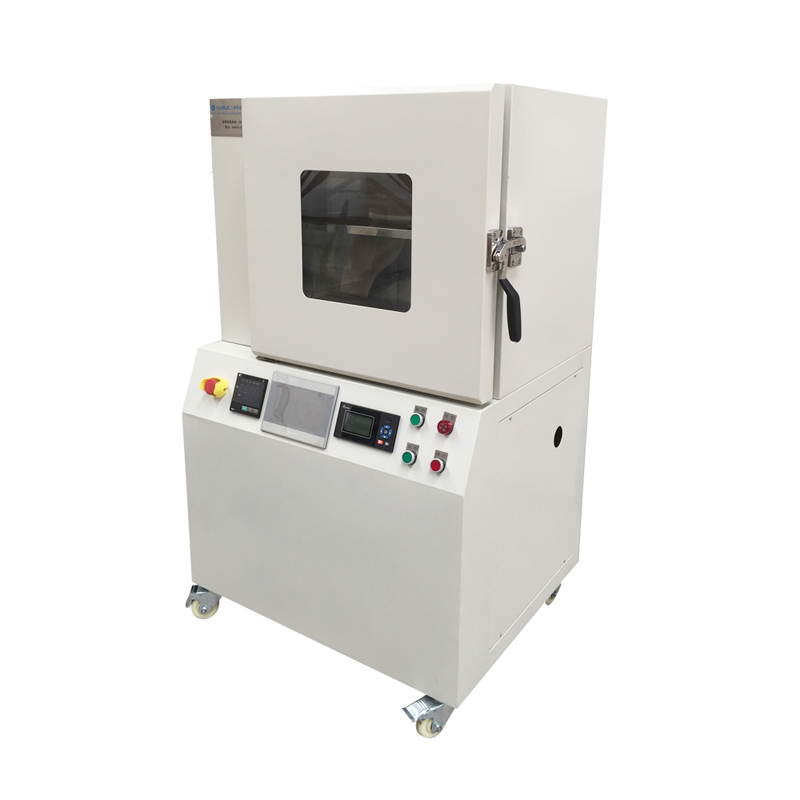
The housing is made of stainless steel